Learn the rescue phrases first, they matter most
Most phrase lists start with greetings. That's the wrong order. The phrases that change your daily life fastest are the ones that keep a conversation alive when you get lost, because getting lost is exactly what happens to every beginner, constantly.
Learn these five before anything else. They're worth more than fifty vocabulary words, because they turn a dead-end into a continued conversation:
- ¿Puede repetir, por favor? — Can you repeat that, please? (Your most-used phrase, guaranteed.)
- Más despacio, por favor. — Slower, please. (Mexicans, like everyone, speak fast to natives; this fixes it politely.)
- ¿Cómo se dice ___? — How do you say ___? (Turns any interaction into a lesson.)
- No entiendo. — I don't understand. (Honest and useful; better than pretending.)
- ¿Me puede ayudar? — Can you help me? (Opens almost any door.)
Why these first? Because the beginner's real fear isn't grammar, it's the moment the other person says something you didn't catch and the conversation collapses into an awkward switch to English. These phrases prevent that collapse. With them, you can attempt Spanish in real situations knowing you have a safety net, and attempting is how you learn.
One cultural note that makes all of them work better: Mexican Spanish is warm and courteous. A por favor, a gracias, a disculpe (excuse me) goes a long way, and people respond to the effort with real patience.
Phrases by everyday situation
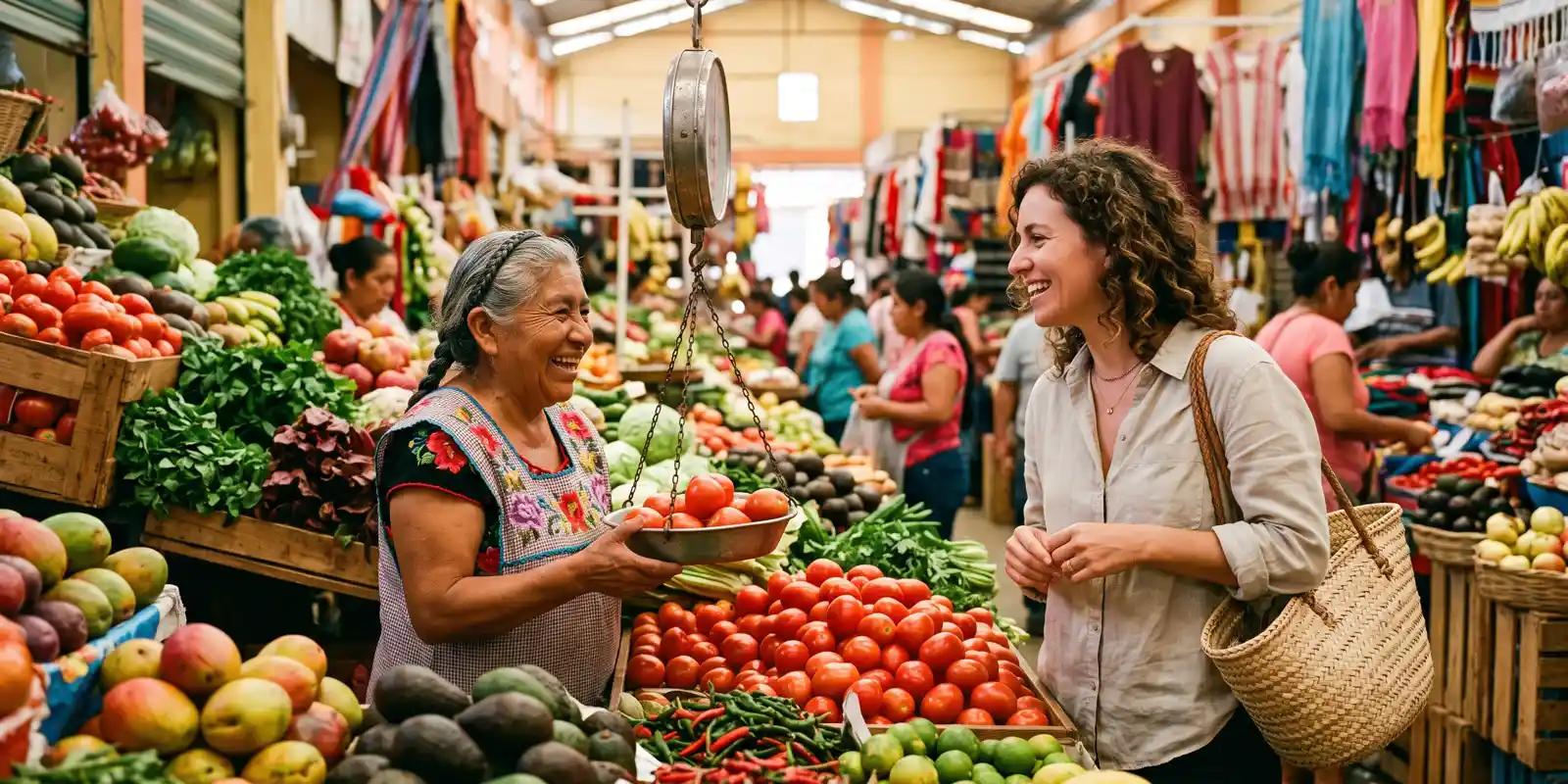
Shopping, markets and eating out (your most frequent interactions):
- ¿Cuánto cuesta? — How much is it? (Learn numbers alongside this, they're your highest-value vocabulary.)
- ¿Me da uno de esos, por favor? — Can I have one of those, please? (Point and use it, works everywhere.)
- La cuenta, por favor. — The check, please.
- ¿Aceptan tarjeta? — Do you take card? (Many small places are cash-only; useful to ask first.)
- Para llevar / para aquí. — To go / for here.
- Sin ___, por favor. — Without ___, please. (Essential for allergies and preferences: sin cebolla, sin picante.)
Getting around:
- ¿Dónde está ___? — Where is ___?
- ¿Está lejos? — Is it far?
- ¿Cuánto cobra a ___? — How much to ___? (For taxis, before you get in.)
- Aquí está bien, gracias. — Here is fine, thanks. (To stop.)
Services and home (where English stops working fastest):
- Tengo un problema con ___. — I have a problem with ___ (el agua, la luz, el internet).
- ¿Cuándo puede venir? — When can you come? (And remember: ahorita in the answer does not mean "right now.")
- ¿Cuánto le debo? — How much do I owe you?
Shopping and eating
Ready to actually speak?
Take the placement test and start at exactly your level. In person in Playa del Carmen or Tulum, or live online.
Take your free placement test and go from phrases to real conversation — Book your spotThe phrases that matter when it's serious
Everyday phrases are for convenience. These are for the moments that actually matter, and they're the strongest argument for learning real Spanish rather than getting by.
At the doctor or pharmacy (this is a safety issue, not a convenience):
- Me duele aquí. — It hurts here. (With pointing, universally understood.)
- Soy alérgico/a a ___. — I'm allergic to ___. (Know your allergy words cold: penicilina, nueces, mariscos.)
- Necesito algo para ___. — I need something for ___ (el dolor, la tos, la gripa).
- Desde hace ___ días. — For ___ days now.
Renting and paperwork:
- No entiendo el contrato, ¿me lo puede explicar? — I don't understand the contract, can you explain it? (Never sign what you can't read.)
- ¿Está incluido ___? — Is ___ included? (el agua, la luz, el internet in rent.)
When something goes wrong:
- Necesito ayuda. — I need help.
- Llame a la policía / a una ambulancia. — Call the police / an ambulance.
Notice these aren't casual. In a real emergency or a contract dispute, the difference between having these phrases and not having them is significant. This is exactly why "getting by on English" has a ceiling: English works in the tourist zone, but real life, the doctor, the landlord, the emergency, happens in Spanish.
Why memorizing phrases isn't the same as speaking
A list like this is genuinely useful, and you should use it. But be honest about its limit: memorized phrases work until the other person answers.
You ask "¿Cuánto cuesta?" perfectly, and the vendor replies with a number, fast, plus a comment you didn't expect. Now what? The phrase got you in; understanding the answer and responding is a different skill. That's the gap between reciting Spanish and speaking it.
Closing that gap requires two things a list can't give you:
- Listening practice with real speed and the local accent, so the answer isn't a wall of sound.
- The ability to improvise when the interaction leaves the script, which is always.
This is where structured learning turns a phrasebook into actual ability. We teach with task-based learning: instead of memorizing phrases in isolation, you practice the whole situation, the market exchange, the doctor visit, the call to the landlord, including the unpredictable parts. We use real materials from daily life here rather than a textbook, and role plays plus AI chatbots with roles so you can rehearse a conversation, and its surprises, privately before the real one. Research consistently shows anxiety is the main barrier to speaking; rehearsing in a low-stakes setting removes it.
And you learn the Mexican Spanish actually spoken on this coast, including the Quintana Roo flavor and Maya-influenced words no generic app teaches.
How to go from phrases to real conversation
A practical plan to turn this list into ability:
- Master the five rescue phrases this week. They're your safety net. Once you have them, you'll attempt Spanish far more often, because you know you can recover.
- Add numbers and prices next. Highest-frequency, highest-value. You'll use them in every transaction.
- Learn the phrases for your actual daily life. If you cook, market phrases; if you rent, home-service phrases; whatever you face most.
- Use one new phrase in the real world every day. The list gives you the tool; the street makes it permanent.
- Ask people to speak Spanish with you. "Estoy aprendiendo español, ¿podemos hablar en español?" Locals are generous about it, and it breaks you out of the English bubble.
When you're ready to move beyond phrases into real conversation, that's what classes are for. We're a language center founded in 2019 in Playa del Carmen, with campuses in Playa del Carmen and Tulum, teaching Spanish for foreigners with local teachers trained in language teaching. Conversational ability, handling these situations and understanding the replies, sits in the intermediate range and is closer than most expats think. A free placement test shows exactly where you start, and it's usually further along than people expect.
Your free trial class is waiting
Visit the school, take your placement test and see why at Idiomarcui you speak from day one.
Take your free placement test and go from phrases to real conversation — Book your spotFrequently asked questions
What Spanish phrases do I need most for daily life in Mexico?
The rescue phrases first: ¿Puede repetir, por favor? (can you repeat?), Más despacio, por favor (slower please), ¿Cómo se dice...? (how do you say?), No entiendo (I don't understand) and ¿Me puede ayudar? (can you help me?). They keep a conversation alive when you get lost.
What are the most useful Spanish phrases for shopping in Mexico?
¿Cuánto cuesta? (how much?), ¿Me da uno de esos? (can I have one of those?), ¿Aceptan tarjeta? (do you take card?), para llevar/para aquí (to go/for here), and sin ___ por favor (without ___), which is essential for allergies and preferences.
What Spanish do I need at the doctor in Mexico?
Key phrases: Me duele aquí (it hurts here), Soy alérgico/a a ___ (I'm allergic to ___), Necesito algo para ___ (I need something for ___), and desde hace ___ días (for ___ days). This is a safety issue, so learn your allergy words cold.
Is it enough to memorize Spanish phrases?
Phrases work until the other person answers. Memorizing gets you into an interaction, but understanding the reply and improvising when it leaves the script is a different skill. That requires listening practice at real speed and the ability to respond, which classes build.
How do I turn Spanish phrases into real conversation?
Master the five rescue phrases, add numbers and prices, learn phrases for your actual daily life, use one new phrase in the real world each day, and ask people to speak Spanish with you. To go beyond phrases, structured classes build listening and improvisation.