What "immersion" actually means, and what it doesn't
The word immersion gets stretched to cover everything from a two-week vacation course to simply owning a condo in Mexico. Worth being precise, because the definition determines whether it works.
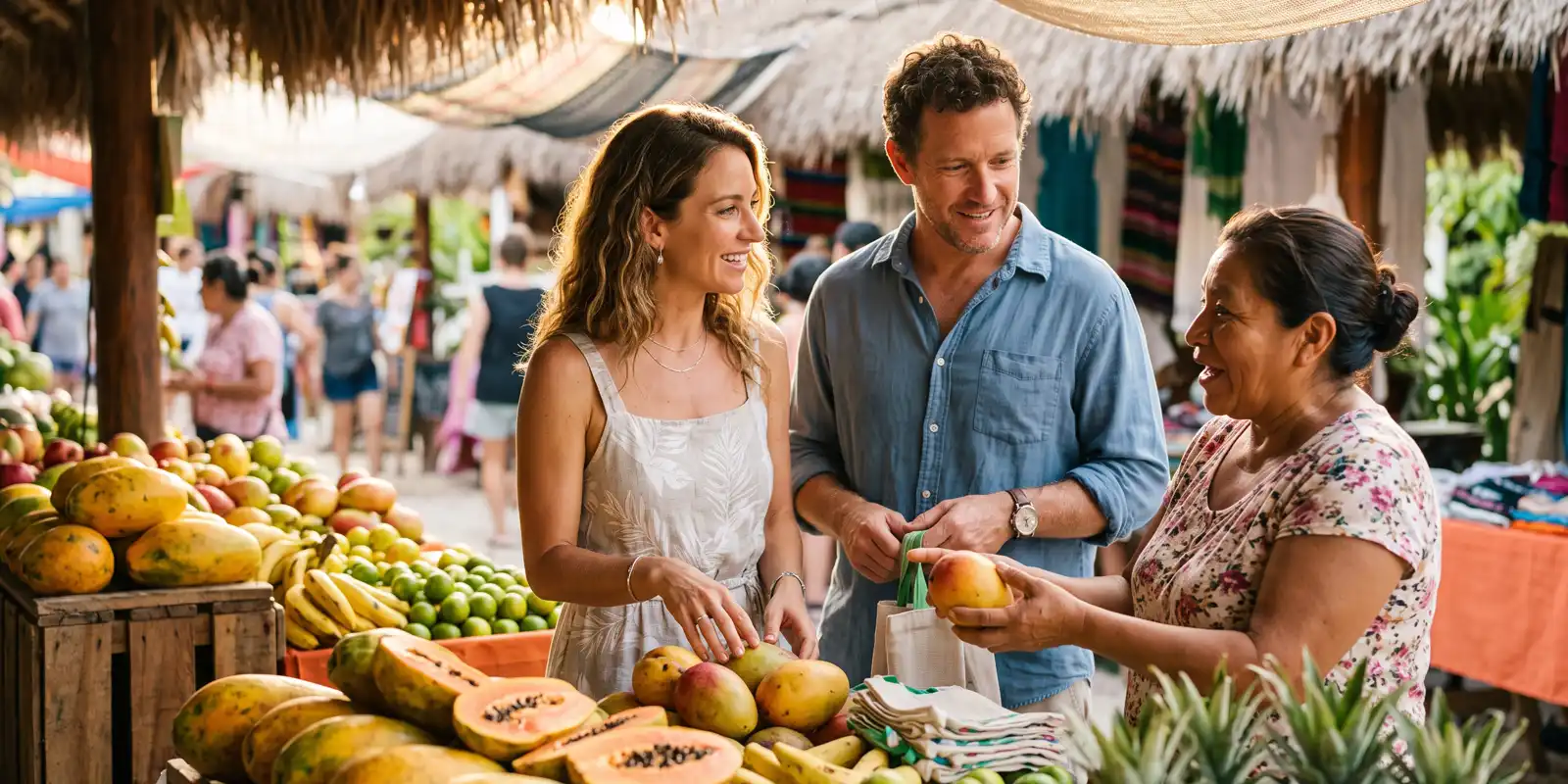
Immersion means conducting real parts of your life in Spanish, repeatedly, at a level that stretches you. That's it. It is not geography. Standing in Mexico while living in English, English-speaking friends, English menus, English Netflix, is not immersion; it's tourism with a long lease. Conversely, you don't need a full-time academy program to be immersed. An expat who takes structured classes twice a week and deliberately runs errands, friendships and problems in Spanish is more immersed than a student who does six classroom hours a day and then retreats to an English-speaking hostel.
Why does immersion work when it's real? Because language sticks when it's used under mild pressure with real stakes. Explaining to a plumber what's leaking, or negotiating at the mercado, forces your brain to retrieve, improvise and repair, exactly the muscles a classroom alone can't fully train. And classes matter for the opposite reason: the street gives you practice but not correction. Without structure, most people fossilize at survival level, fluent in their own mistakes.
So the honest formula, the one this whole article unpacks, is: structure + street. Classes provide the system, the corrections and the progression; Playa del Carmen provides an unlimited supply of real-stakes practice. Either half alone plateaus. Together they compound weekly.
Why Playa del Carmen is a superb immersion setting, with one warning
As an immersion environment, Playa del Carmen has a rare combination of features.
- Real Mexican daily life within walking distance. Step a few blocks off the tourist corridor and you're in working neighborhoods with fruterías, loncherías, hardware stores and markets that run entirely in Spanish. Your practice field starts where the souvenir shops end.
- A service culture used to learners. Locals here deal with foreigners daily and are strikingly patient with beginner Spanish. Effort is rewarded with warmth, not eye-rolls, which matters enormously when you're at the stage where every sentence is a small act of courage.
- Variety of registers. A taxi conversation, a bank appointment, a cenote guide's briefing, a neighbor's party: each demands slightly different Spanish. Living here rotates you through registers a textbook never sequences.
- Weather for consistency. Trivial-sounding, decisive in practice: a year-round outdoor life means year-round contact with people, and contact is the raw material of immersion.
Now the warning. Playa is also one of the easiest places in Mexico to avoid Spanish entirely. Quinta Avenida operates substantially in English. Expat neighborhoods, gyms, coworking spaces and Facebook groups form a complete parallel life. The town will never push you into Spanish; the courteous default, the moment anyone hears your accent, is to switch to English for you. Immersion in Playa del Carmen is opt-in. The environment is world-class, but only for people who deliberately walk into it, which is exactly what the next section is for.
Ready to actually speak?
Take the placement test and start at exactly your level. In person in Playa del Carmen or Tulum, or live online.
Start your immersion this week — free placement test at Calle 72 or onlineBuilding your program: the structured half
The classroom half of your immersion program should do four jobs the street can't: place you accurately, correct you, sequence what you learn, and keep you accountable. Here's how that looks at our school.
Placement first. Everything starts with a free placement test. Most expats who've been here months are past absolute zero without realizing it, and starting at the wrong level wastes either your money or your confidence. Take the test even if you're certain you know nothing.
A level system with a visible path. The program runs in 7 levels, each a four-month module. You take only the levels you need, and almost nobody needs all seven; most expats' target, comfortable conversational Spanish, sits well before the end of the path. The point of visible levels isn't bureaucracy, it's motivation: you always know where you are and what's next.
Formats that fit an expat's actual life:
- In-person: two 2-hour sessions per week, at the Playa del Carmen campus on Calle 72 or in Tulum. The rhythm matters: two spaced sessions beat one marathon, because that's how memory consolidates.
- Saturday executive: one 4-hour Saturday session, built for people whose weekdays are spoken for.
- Live online: real classes with real teachers, for weeks when you travel or simply live far from either campus.
Classes built around tasks, not tables. Sessions are organized around things you'll actually do, ordering, explaining a problem, making an appointment, so Monday's class becomes Tuesday's errand. That handoff from classroom to street is precisely the seam where immersion happens.
Building your program: the street half (a sample week)
The street half needs as much intention as the class half. Here's a realistic week for an expat combining two in-person sessions with deliberate practice. Adjust freely; the principle is that every class is followed by same-day use.
- Monday, class day. Two hours in the morning. On the walk home, one deliberate transaction using today's material: buy fruit, ask a price, order lunch, entirely in Spanish.
- Tuesday. Do one errand you'd normally do in English, in Spanish: the pharmacy, the bank, the phone company. Rescue phrases allowed and encouraged; ¿puede repetir? is practice, not failure.
- Wednesday, class day. After class, fifteen minutes of listening: a Mexican podcast, radio, or simply sitting in a lonchería where Spanish is the soundtrack. Comprehension grows on volume of exposure, and Playa provides it free.
- Thursday. Social rep: greet neighbors properly, chat with the señora at the tienda, ask your taxi driver one real question. Small talk is a skill, and it's the doorway to every friendship here.
- Weekend. Take your Spanish somewhere with stakes and joy: a cenote trip booked in Spanish, a market in a non-tourist neighborhood, a Mexican friend's carne asada. This is the part of the program that doesn't feel like a program.
One rule ties the week together: ask people not to switch to English. A friendly "estoy aprendiendo español, ¿podemos hablar en español?" works nearly every time, and people here are generous about it. Without that sentence, the town's courtesy will quietly dismantle your immersion one accommodating waiter at a time.
What it costs and how to start
One of the underrated facts about building your immersion program in Playa del Carmen rather than through an international immersion package: the street half is free, and the structured half is local-priced.
At Idiomarcui, the numbers are simple: enrollment is $1,200 MXN and monthly tuition is $1,400 MXN, roughly the price of a couple of nice dinners on Quinta Avenida, for a month of structured classes with trained teachers. Compare that with destination immersion programs marketed abroad, which bundle housing and activities into a price many times higher, for a few weeks that end. Living here, you already own the expensive part: the destination. What you're adding is the system.
Getting started takes two steps, both free:
- The placement test. Free, and worth doing even from zero. It turns "I should really learn Spanish someday" into "I'm a level 1 student with a Wednesday class," which is the actual moment most people's Spanish begins.
- A trial class. Sit in a real session before committing. Feel the pace, meet a teacher, watch how a task-based class runs. Immersion is a months-long routine; you should like the room you'll be doing it in.
We're a language school founded in 2019, with campuses in Playa del Carmen (Calle 72) and Tulum, teaching Spanish for foreigners alongside English, French, Italian and Mandarin, five languages under one roof, with teachers trained in language-teaching methodology, not simply native speakers. The town has already built half of your immersion program. Come build the other half.
Your free trial class is waiting
Visit the school, take your placement test and see why at Idiomarcui you speak from day one.
Start your immersion this week — free placement test at Calle 72 or onlineFrequently asked questions
What is a Spanish immersion program in Playa del Carmen?
It's the combination of structured classes with deliberate daily-life practice in the town itself: mercados, taxis, neighbors, errands. Immersion isn't a package you buy, it's a weekly routine where classes provide system and correction, and Playa provides unlimited real-stakes practice.
Can't I just immerse myself by living in Playa del Carmen?
Not automatically. Playa's tourist economy runs substantially in English, and locals politely switch languages when they hear an accent, so many residents plateau at survival phrases for years. Immersion here is opt-in: you have to deliberately run parts of your life in Spanish and ask people to keep speaking it with you.
How much does a Spanish program cost at Idiomarcui?
Enrollment is $1,200 MXN and monthly tuition is $1,400 MXN. The program runs in 7 levels of four-month modules, and you only take the levels you need. The placement test is free, and there's a trial class so you can experience a session before committing.
What class formats are available for expats?
Three: in-person classes in two 2-hour sessions per week at the Playa del Carmen (Calle 72) or Tulum campus, a Saturday executive format of 4 hours for people with full weekdays, and live online classes with real teachers for travel weeks or remote living.
How many hours a week does real immersion take?
A realistic baseline is four hours of structured class plus small daily reps: one errand in Spanish, fifteen minutes of listening, real greetings with neighbors. The decisive habit is same-day use, taking what each class taught you into a real transaction before the day ends.